Fruit drop is a naturally occurring phenomenon in Bael cultivation; however, high rates of drop pose a major concern for commercial growers. The severity and extent of fruit drop vary significantly depending on the and local Agro-climatic conditions & cultivar (variety).
Observations indicate two main periods of fruit drop:
Immature Fruit Drop: Occurs during the early developmental stages when fruits are very small (marble-sized). This initial phase accounts for the largest proportion of total fruit loss.
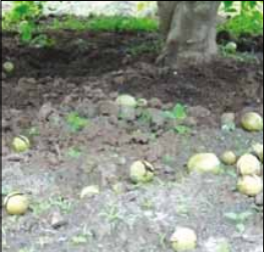
Mature Fruit Drop: Involves fully or heavily developed fruits (sometimes as large as a football) dropping later in the season, notably during August – September @ Raipur Chhattisgarh.
Management Strategies
- Cultural & Good Agricultural Practices (GAP): Ensuring optimal tree health through balanced plant nutrition and adequate irrigation management significantly minimizes fruit drop.
- Growth Regulator Application: Studies shows foliar application of Naphthaleneacetic Acid (NAA) at a concentration of 15–20 mg/L of water during the early pea-sized stage effectively reduces fruit drop rates.
Reference List
- Pandey, D., Misra, A. K., Garg, N., Shukla, P. K., Gundappa, Shukla, S. K., & Rajan, S. (2020). Bael Cultivation [Also published as Production, Protection and Processing of Bael]. Technical Bulletin, ICAR-Central Institute for Subtropical Horticulture (CISH), Rehmankhera, Lucknow, Uttar Pradesh, India, p. 40.
- Singh, A. K., Singh, S., & Saroj, P. L. (2018). The Bael (Production Technology). Technical Bulletin No. CIAH/Tech./Pub. No. 67, ICAR-Central Institute for Arid Horticulture (CIAH), Beechwal, Bikaner, Rajasthan, India, pp. 1–55